
⏸️ What Happened — The “Glitch” That Sparked Hype
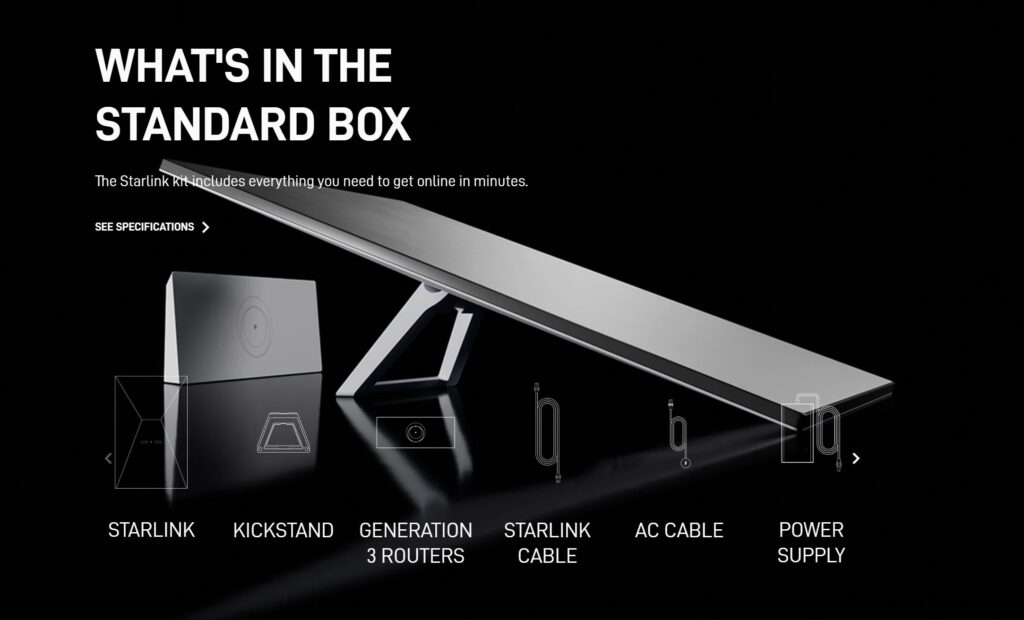
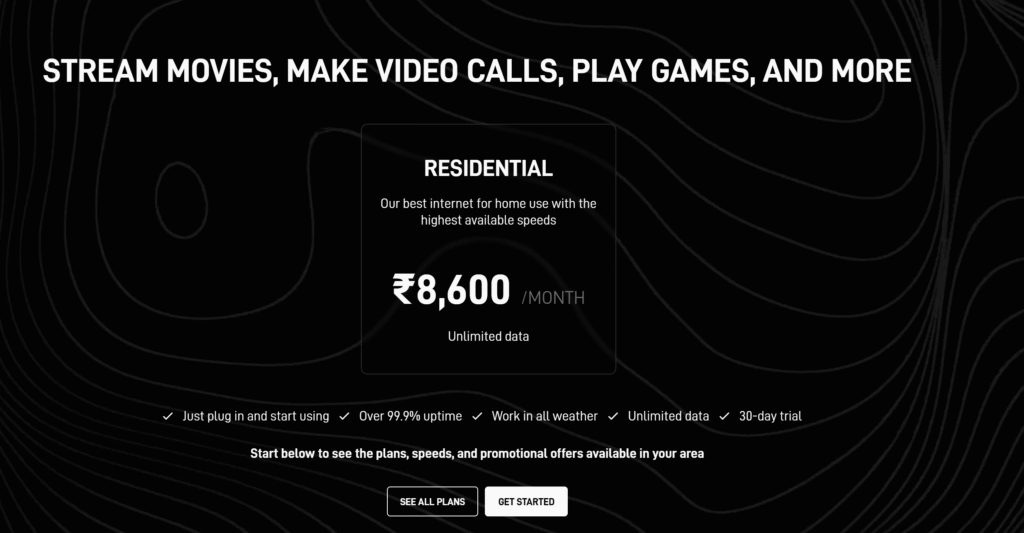
- Recently, screenshots circulated online showing what looked like official pricing for Starlink India Launch 2025: ₹8,600/month for a residential plan, a ₹34,000 hardware kit, a 30-day free trial offer, and promises of over 99% uptime — pitched as an upgrade for remote and underserved regions.
- Given that existing broadband alternatives (like broadband/wireless plans from local ISPs) often cost far less (e.g. around ₹3,999/month for options from Jio AirFiber or Airtel’s streaming bundles), these quoted rates caused widespread attention and debate — especially around affordability for rural or low-income areas.
- However, shortly after the screenshots gained traction, Starlink leadership (including VP level) clarified that the website shown wasn’t live for India. The pricing and plan details were never real — they were placeholder or “dummy test data” mistakenly exposed due to a configuration error. There is, officially, no confirmed plan or price yet for India.
🧠 What This Means — The Real Story Behind the Hype
- No launch — just a technical mistake. The glitch simply exposed internal test data. Starlink has not announced rollout timing, official pricing, or hardware availability for India.
- Community reaction shows demand & skepticism. The fact that the screenshots sparked so much discussion reveals there is strong interest in high-speed satellite internet, especially for remote regions. But the high price prompted concern over affordability.
- Affordability remains a critical barrier. Even if Starlink launches, pricing will be under scrutiny. If real plans are cheap enough, it could boost connectivity in rural/underserved areas — but expensive plans risk limiting adoption to urban or high-income users, undermining the “connect the unconnected” promise.
- Regulatory & rollout uncertainties still loom. Starlink has to navigate Indian regulations, approvals, and infrastructure challenges before a real launch — the glitch does not change that.
🔭 What to Watch Next — What Should Stakeholders Expect by 2026

- Official announcement from Starlink: A public launch plan, actual pricing, and hardware cost disclosure will be the real trigger for uptake.
- Competitive benchmarking vs. Indian ISPs: If Starlink’s plans come in near or below existing broadband/wireless costs (post-hardware amortization), it could be a game-changer for rural broadband.
- Public sentiment & affordability metrics: Watch for data on willingness to pay, actual demand in rural zones, and how satellite internet compares to wired or wireless alternatives in speed, reliability, and latency.
- Regulatory milestones & rollout schedule: Spectrum licensing, import permissions, and last-mile connectivity (or broadband-as-satellite) execution will determine how fast this can scale in India.
🚀 Projected Starlink India Pricing Models (2025–2026)
Low-Cost • Mid-Tier • Premium Scenarios
(with adoption estimates + revenue impact)
1️⃣ LOW-COST MODEL (Aggressive India Entry Strategy)
Goal: High adoption in rural markets, regulatory goodwill, faster market penetration.
Pricing Projection
- Monthly Plan: ₹1,999 – ₹2,499
- Hardware Kit: ₹18,000 – ₹20,000 (subsidized)
- Speed: 50–120 Mbps
- Fair Use Policy: 250 GB high-speed + unlimited throttled
- Target Audience: Remote villages, farms, SMEs in low-connectivity zones
Adoption Projection (First 12 Months)
| Segment | Estimated Users |
|---|---|
| Rural households | 1.2–1.8 million |
| Small businesses | 0.4–0.6 million |
| Schools/NGOs | 80k–120k |
Revenue Forecast
- ₹4,500–₹6,500 crore annually (from subscriptions)
Pros
- Big regulatory approval boost
- True democratization of satellite internet
- Massive PR win in India
Risks
- Starlink absorbs heavy hardware subsidy
- Profit margin becomes thin
2️⃣ MID-TIER MODEL (Most Likely Scenario)
Goal: Balanced affordability + profitability, matches Starlink patterns in similar economies.
Pricing Projection
- Monthly Plan: ₹3,500 – ₹4,500
- Hardware Kit: ₹25,000 – ₹29,000
- Speed: 100–220 Mbps
- Fair Use: 500 GB
Adoption Projection (First 12 Months)
| Segment | Estimated Users |
|---|---|
| Rural households | 700k–1M |
| SMEs | 350k–500k |
| Frequent travelers / RV users | 50k–80k |
Revenue Forecast
- ₹5,000–₹8,000 crore annually
Pros
- More sustainable margins
- Competitive vs Jio/Airtel’s wireless broadband
- Attractive to SMEs, farms, remote offices
Risks
- Still high for low-income rural families
- Adoption depends on EMI/financing support
3️⃣ PREMIUM MODEL (High-End, Niche Rollout)
Goal: Selective early launch focused on enterprise & remote professionals.
Pricing Projection
- Monthly Plan: ₹6,500 – ₹8,000
- Hardware Kit: ₹30,000 – ₹34,000
- Speed: 150–350 Mbps
- Fair Use: 1 TB
Adoption Projection (First 12 Months)
| Segment | Estimated Users |
|---|---|
| Enterprises | 120k–180k |
| Remote workers | 60k–90k |
| Disaster relief / controlled-access clients | 25k–40k |
Revenue Forecast
- ₹3,000–₹4,400 crore annually
Pros
- High-margin market
- Appeals to premium remote workers, film crews, mining, oil & gas, tourism resorts
Risks
- Public perception backlash (too expensive)
- Rural impact becomes minimal
📊 Comparison Table: Three Pricing Scenarios
| Model | Monthly Price | Hardware Cost | Target Users | First-Year Users | Revenue Potential |
|---|---|---|---|---|---|
| Low-Cost | ₹1,999–2,499 | ₹18k–20k | Rural mass market | 1.6–2.5M | ₹4.5k–6.5k cr |
| Mid-Tier | ₹3,500–4,500 | ₹25k–29k | Rural + SMEs | 1.1–1.6M | ₹5k–8k cr |
| Premium | ₹6,500–8,000 | ₹30k–34k | Enterprise + niche users | 200k–300k | ₹3k–4.4k cr |
🎯 FINAL TAKE: Which Scenario is Starlink MOST likely to choose?
⭐ The Mid-Tier Model (₹3.5k–4.5k/mo) is the most realistic.
Here’s why:
- Matches Starlink’s global pricing adjusted for local purchasing power
- Still high enough to keep margins healthy
- Affordable enough for SMEs + rural middle class
- Avoids the backlash that the “₹8,600 screenshot” created
✅ Key Takeaways
- The viral screenshots of Starlink India pricing were not real — just internal test-data shown by mistake.
- Interest and demand for satellite broadband remain high, but real pricing will make or break adoption in cost-sensitive markets like India.
- The glitch served as a de facto “stress test” for demand: people reacted fast — but also raised affordability concerns.
- The real story begins only when Starlink issues official plans. Until then, treat any leaked screenshot or “price rumor” as speculation, not fact.