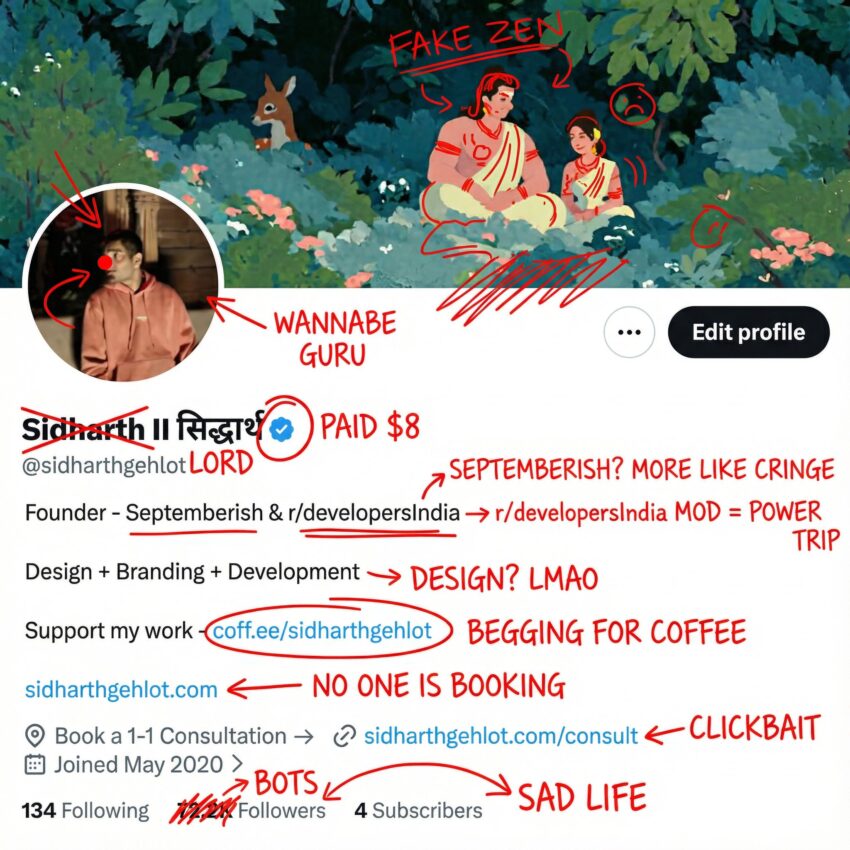
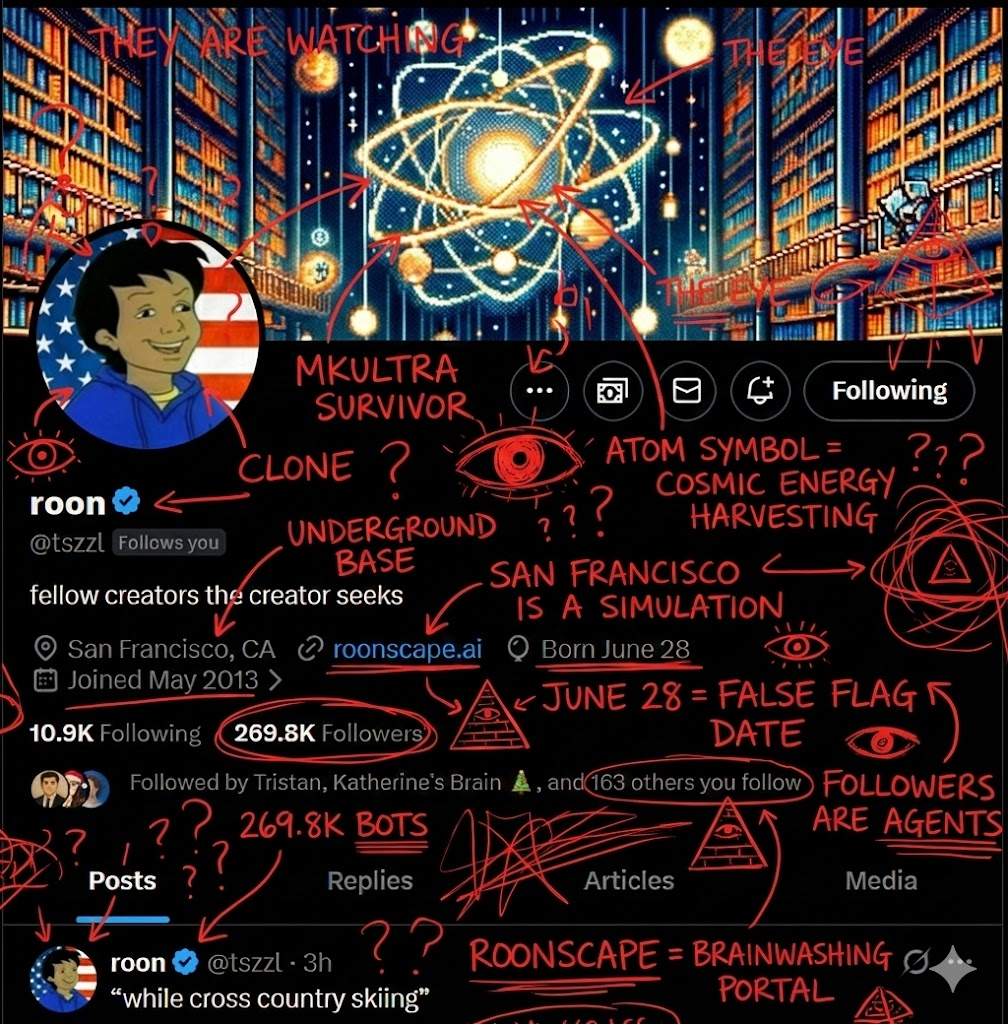
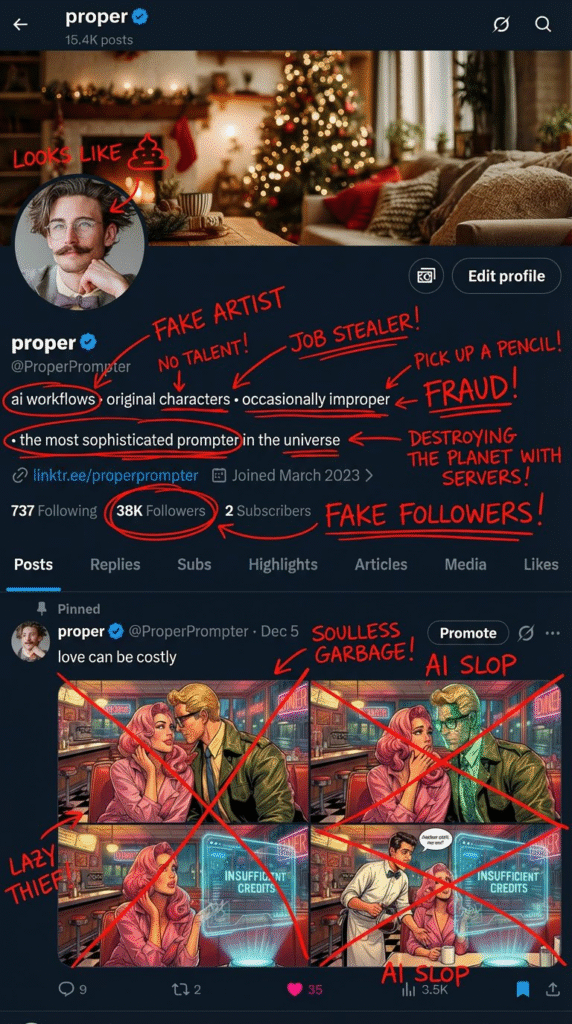
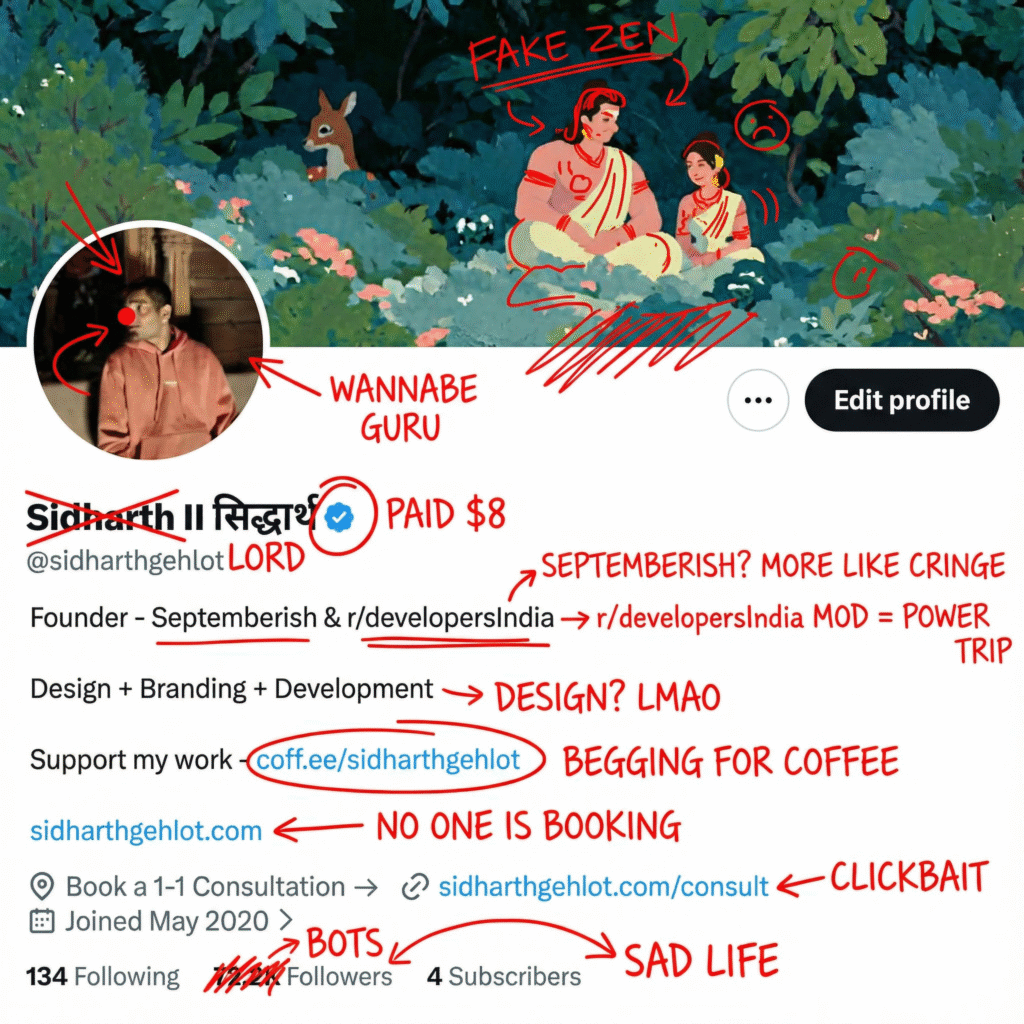
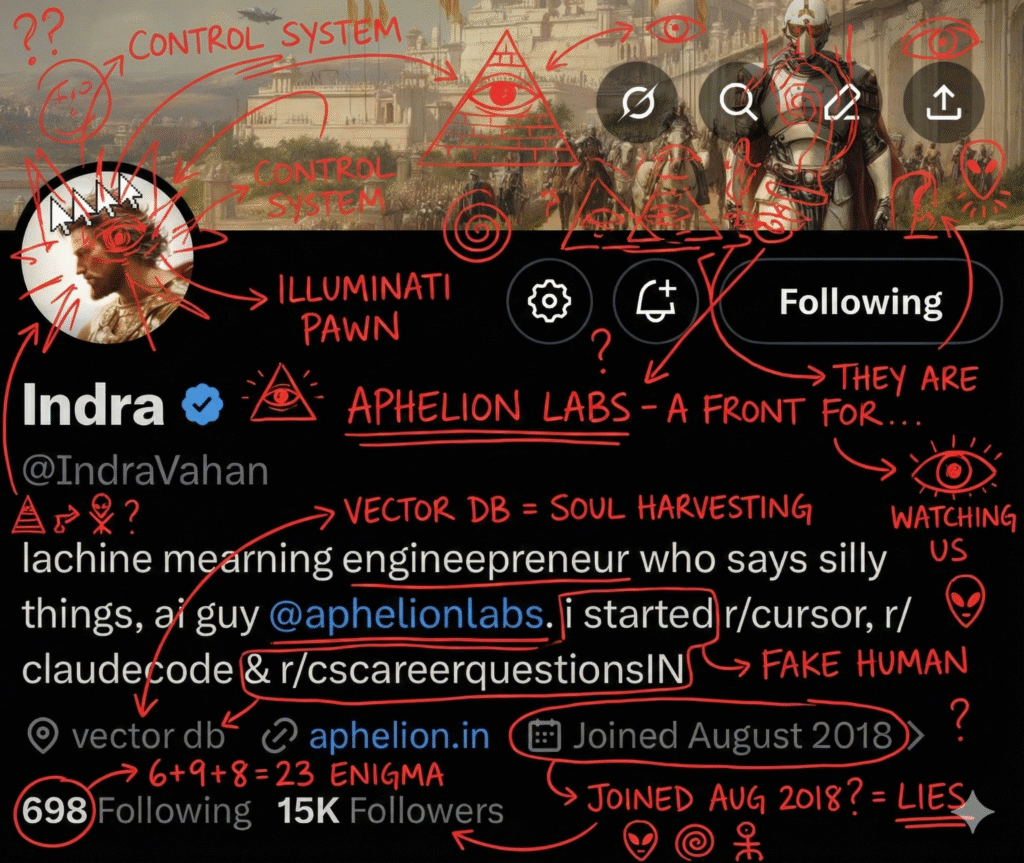
The AI Conspiracy Scribble Profiles trend began with a user on X applying the prompt: “overlay this with insane schizophrenic conspiracy scribbles, red ink, doodles, remarks, comments.”
Users fed their profile photos into Nano Banana Pro / Gemini 3 Pro and received stylized “decoded” versions: ordinary bios turned into conspiratorial backstories — cat pictures labelled “surveillance drones,” technical skills rebranded as “MIND CONTROL LANGUAGE,” join-dates flagged as “false flags,” and more.
What started as a meme or joke spread fast: by evening hundreds had joined, laughing and sharing the absurd results.
🔎 Community Reaction — Why People Love (Or Hate) It
👍 What Fans Like
👎 What Critics Worry About
It’s hilarious and absurd — a playful, exaggerated commentary on social-media identity and online personas.
It plays with imagery tied to conspiracies and paranoid thinking — could normalise disturbing tropes or blur satire and real conspiratorial framing.
Creative outlet: it lets users re-contextualize themselves or others in a surreal, subversive style — akin to digital street art.
It risks mis-interpretation: older or more credulous audiences might take the “conspiracy” visuals seriously.
Provides commentary on how easily online identity can be “decoded” or ridiculed — a social media satire tool.
Adds to the growing pool of image-based misinformation or “fauxtography”: manipulated visuals that can mislead.
Several users explicitly commented it was a “fun challenge.” For example:
“I accepted the challenge ✓”
But the pattern echoes concerns raised in academic studies about image-based manipulation on social media. For instance, research on “fauxtography” shows that manipulated or misleading images often get more engagement and can fuel disinformation or distorted narratives.
Image-based trust erosion: As more users share heavily stylized, AI-altered profile pictures, it becomes harder to trust a profile at face value. This amplifies uncertainty — a “boy who cried wolf” effect for selfies and avatars.
Weaponization risk: While many use this for humor, the same tools can be used to generate misleading propaganda, smear campaigns, or manipulated identities. Given how easily AI can alter context, a red-inked “conspiracy” image could mislead viewers.
Rise of “fauxtography 2.0”: With simple prompts, generative AI lowers the barrier for anyone to produce “photo-realistic but fake” content — strengthening disinformation vectors, especially if shared without disclaimers.
New pressure on platforms: Social apps may need to build detection, watermarking, or context-labeling mechanisms to alert users when images are AI-altered or stylized — otherwise, trust and authenticity degrade rapidly.
🧪 What Experts Are Saying — Research & Risks
Scholars have warned that generative-AI outputs, especially manipulated images, can erode social trust and complicate efforts to identify authentic content. Research shows that manipulated images tend to receive higher engagement than ordinary photos — making them especially potent if used maliciously.
On a broader scale, the phenomenon of “AI-mediated belief distortion” — where generative systems help shape collective memories or narratives — is being studied under frameworks like “distributed cognition”. In extreme cases, repeated exposure to stylized or distorted content can subtly shift perceptions.
⚠️ Ethics & Community Guidelines — What You Should Watch Out For
If you share or re-use these “conspiracy-style” images: mark them clearly as satire or stylized alterations. Without disclaimers, they might be construed as real commentary.
Avoid targeting vulnerable individuals or identities: overlaying conspiracy scribbles onto a real person’s profile could be used maliciously — harassment, doxxing, or defamation.
For platforms or brands: treat this trend as a canary warning — if stylized content becomes widespread, plan for moderation, user education, or visible disclaimers.
🎯 What This Means for Content Creators, Agencies & Communities
For creators/marketers: There’s creative potential — stylized “AI-art” avatars or visuals could be leveraged for edgy branding, campaigns, or social experiments. But use with caution: clearly label it as artwork or satire.
For community managers/mod-teams: Monitor misuse — trend could easily be co-opted for harassment or misinformation. Implement content-policy guidelines around AI-generated stylized imagery.
For platform architects: Consider building prompt-detection, metadata tracking, or visible “AI-generated content” badges to preserve authenticity.
✅ Conclusion: Fun Meme or Red Flag?
The “AI Conspiracy Scribbles” trend — sparked by a simple prompt on Nano Banana Pro — is a perfect example of generative AI’s double-edged nature. On one side: creativity, satire, shared laughter. On the other: loss of trust, blurring of reality, and a potential hazard for misinformation and impersonation.
If you’re in content, community management, or platform design — this trend is a reminder: stylized AI-art is not always harmless. Handle with clarity, transparency, and a sense of responsibility.